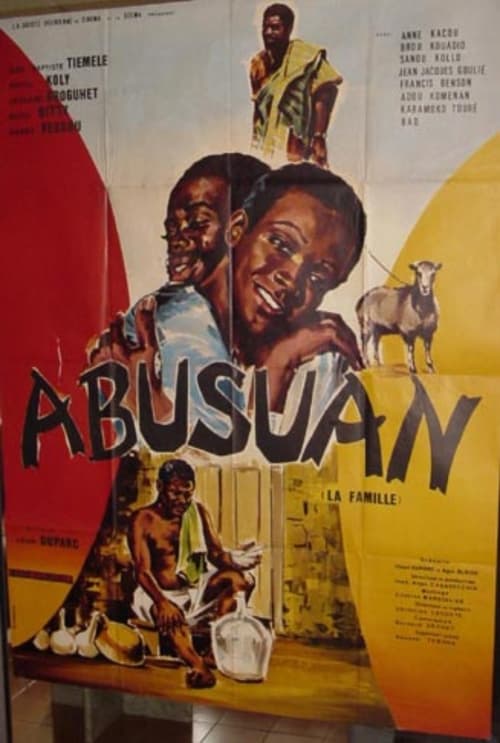
Abusuan
In Henri Duparc's Abusuan, a young Ivorian professional returns home after fifteen years studying in France and takes up a senior position in architecture. His visit to relatives in the countryside is meant to reconnect him with the family and community he left behind. Instead, he discovers how sharply his comfortable prospects differ from the difficulties facing those around him. Relatives hope his education, salary, and connections will open doors for their children, while problems of unemployment, limited schooling, and migration from villages to cities complicate the reunion.
Duparc builds the film around the comic and uncomfortable consequences of these expectations. The returning professional and his household become a meeting point for people whose hopes cannot all be satisfied, turning a family visit into a portrait of social pressure. Rather than presenting the village and city as simple opposites, the story finds contradictions in both: urban status promises opportunity but also brings obligations and pretensions. The ensemble situations and satirical tone make the conflict accessible without erasing the genuine hardship beneath the humor.
Made in Côte d'Ivoire in 1972, Abusuan belongs to an early period of post-independence African feature filmmaking in which directors increasingly represented contemporary life from within their own societies. Its attention to education abroad, rural inequality, and the responsibilities attached to professional success reflects questions that extended far beyond one family. Duparc's comedy asks what progress means when individual advancement does not automatically improve the lives of relatives and neighbors. The film remains a revealing example of how popular storytelling can examine the social costs of modernization.
About
- Country
- Côte d'Ivoire
- Running time
- 1 h 35 min
- Released
- 1972
Cast and crew
Where to watch
Not streaming yet. Tell us where it’s showing.





Comments
Loading comments…